The sheep testicle is a red offal, classified in the same regulatory category as liver or kidneys. Its firm texture and delicate flavor, similar to sweetbreads, make it a suitable piece for grilling. The barbecue gives it a slightly caramelized crust that contrasts with a melting interior, provided that a few preparation steps are mastered.
Red offal on the barbecue: what European regulations require
Before placing anything on the grill, the health question must be addressed. Sheep testicles are subject to the same inspection and traceability rules as other offals under the European Hygiene Package, notably Regulations EC No. 852/2004 and 853/2004. The French DGAL and Anses remind us that the barbecue cooking of offals must reach a sufficient core temperature to limit microbiological risks.
This core cooking requirement has been reinforced since the increase in reports of foodborne infections related to insufficiently cooked meat on the grill, noted in Anses surveillance reports published after 2020. In practical terms, this means that sheep testicles should not be served rare like a steak. The cooking must be complete and uniform, which requires precise heat management.
This constraint, far from being a hindrance, directly guides the cooking technique. It encourages a two-step approach (pre-cooking followed by searing), which is much more reliable than direct high-temperature grilling. Serving an unusual barbecue idea also means ensuring the food safety of your guests.
Preparation of sheep testicles before grilling
The piece generally arrives whole, covered with a thick, opaque membrane. This envelope must be completely removed before any cooking. To facilitate the operation, soaking in salted cold water for one to two hours helps firm up the flesh and makes it easier to detach the membrane.
Removing the membrane and pre-cooking
After soaking, make a lengthwise incision in the membrane with a fine knife, then peel it off like sausage skin. The flesh underneath is smooth, pink, and slightly shiny.
The next step is a quick poaching in simmering flavored water (bay leaf, onion, a few peppercorns). This poaching lasts about fifteen minutes and serves two functions: it ensures an initial core cooking and firms up the texture, making slicing much cleaner. Without this pre-cooking, the flesh remains too soft and disintegrates on the grill.
Slicing and marinating
Once poached and cooled, the sheep testicles are sliced into medallions about one centimeter thick. This thickness allows for surface caramelization without drying out the interior.
The marinade can be kept simple:
- Olive oil, ground cumin, and smoked paprika for a Mediterranean twist that pairs well with the sweetness of the flesh
- Lemon juice, crushed garlic, and fresh coriander, a classic Maghreb profile for grilled offals
- Soy sauce, grated ginger, and honey if you’re looking for a more pronounced sweet-savory contrast
The ideal marinating time is between thirty minutes and two hours. Beyond that, the acidity of lemon or vinegar begins to alter the texture.
Barbecue cooking: managing the fire and grilling time
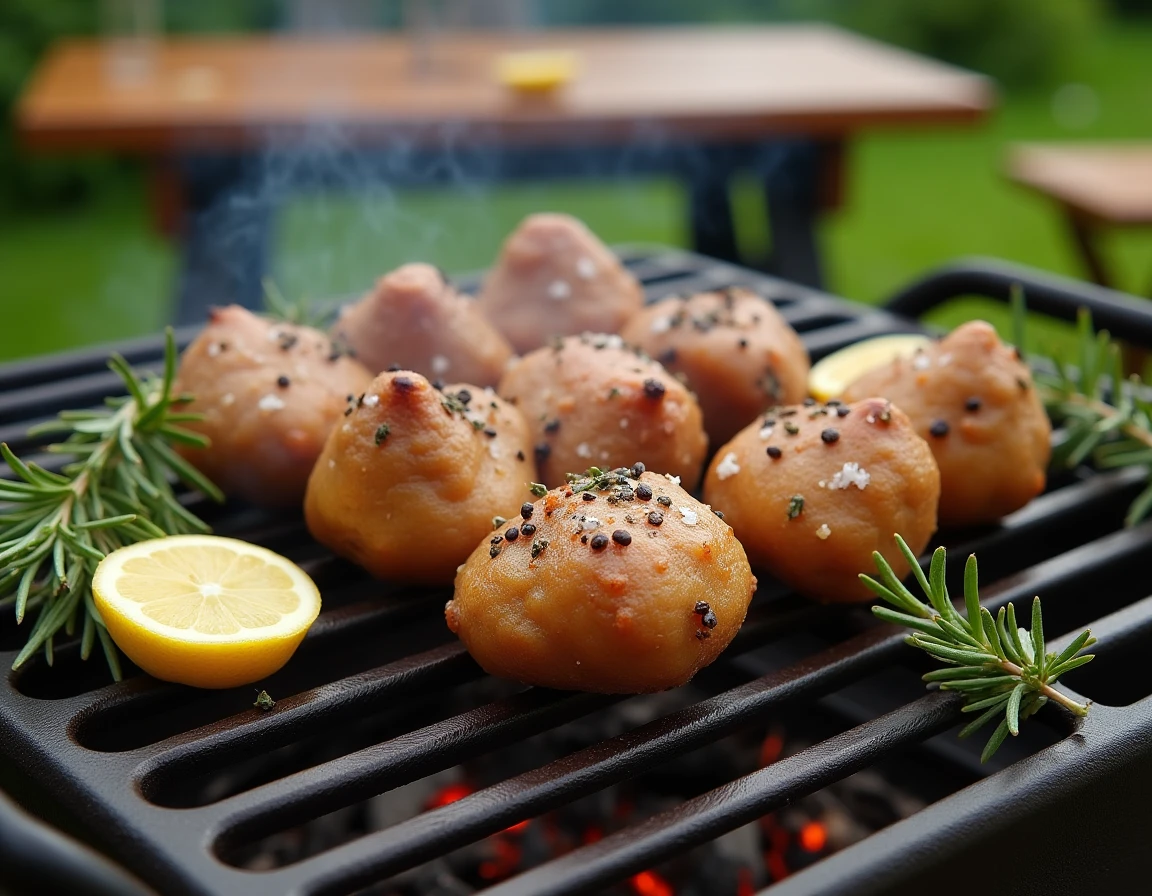
The prior poaching changes the game. The medallions arrive on the grill already cooked through. The goal of the barbecue is therefore purely gustatory: to achieve a golden crust and Maillard aromas without charring a piece that contains little protective fat.
Generously oil the grill. Place the medallions on a direct but moderate heat zone. Two to three minutes per side are sufficient to achieve nice grill marks and a crispy surface. A fire that is too hot dries out the flesh in seconds, as sheep testicles contain less intramuscular fat than most other offals.
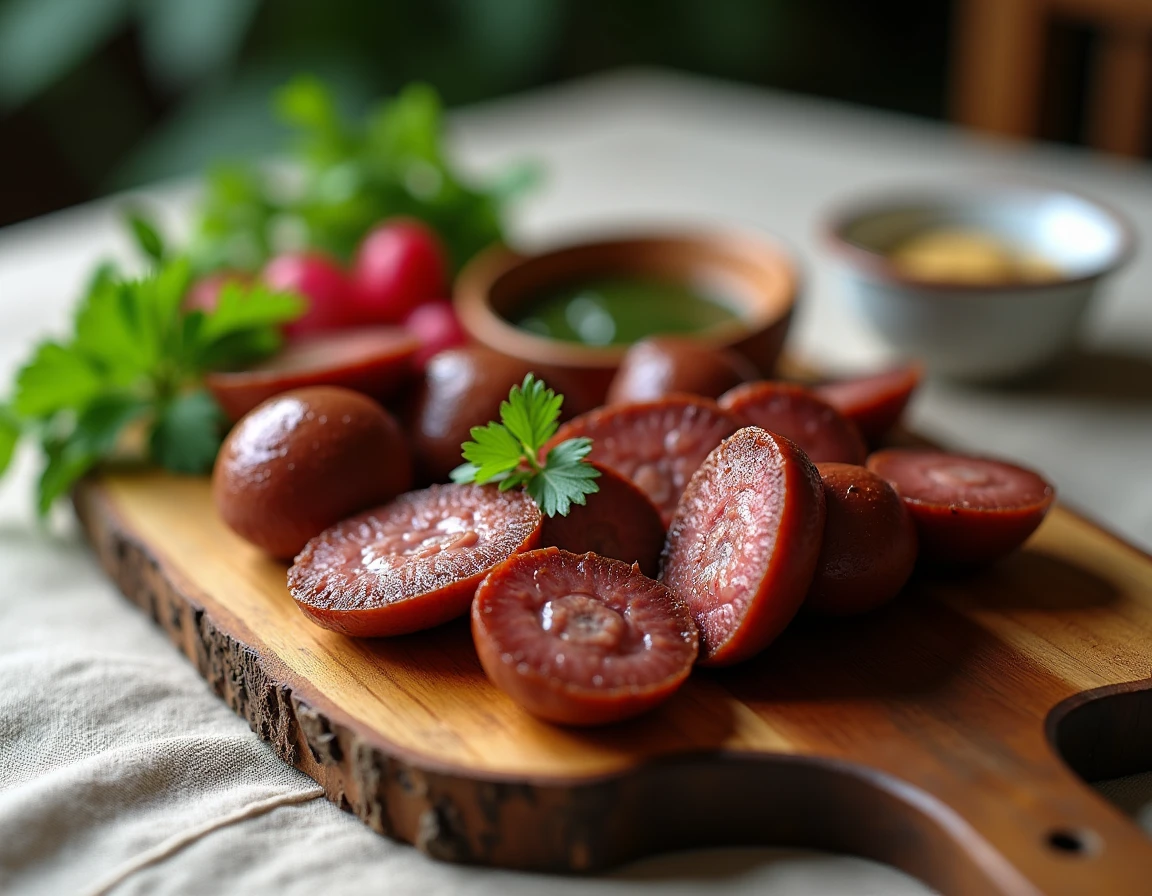
Watch the coloring. As soon as the grill marks are well-defined and the surface takes on a golden hue, remove the medallions. The ideal texture is firm to the touch without being hard. Serve immediately: this piece cools quickly and loses its tenderness in a matter of minutes.
Grilled sheep testicles and the nose-to-tail movement: a waste-reducing approach
Offering offals on the barbecue is not just a culinary provocation. In recent years, the nose-to-tail movement has encouraged both amateur and professional cooks to make use of the entire animal. Chefs like Fergus Henderson in England or Yves Camdeborde in France have helped bring offals back to the center of the plate, including the lesser-known cuts.
The Écotable collective places this approach within a broader logic of anti-waste cooking. Grilling sheep testicles on the barbecue fits into this philosophy: it is a piece that often ends up in the trash due to lack of demand, even though its taste quality rivals that of pieces sold for much more.
Where to find fresh sheep testicles
Supermarkets hardly offer them. The most reliable supply chains remain artisanal butcher shops (by order), open-air markets with local sheep producers, and some short circuits that practice direct sales of whole carcasses. Giving your butcher a few days’ notice remains the safest method to obtain fresh and traceable pieces.
Grilled sheep testicles work well as a shared appetizer, served on a board with toasted bread, a drizzle of lemon, and a pinch of fleur de sel. The piece surprises with its tenderness, confounding those who expect a strong flavor, and sparks conversation around the grill better than any pork ribs.