The choice of adult bedroom paint goes beyond mere aesthetic preference. Since January 2026, Regulation (EU) 2025/2847 requires manufacturers to limit residual VOCs to 5 g/L in interior paints intended for bedrooms, which alters the available offerings. Zero VOC formulations are becoming widespread, and the question of soothing colors for sleep is now posed within a renewed technical framework.
Bedroom Paint and Smart LEDs: An Often Ignored Interaction
A wall color behaves differently under an incandescent bulb compared to a connected LED set to 2,700 K or 4,000 K. Pigments absorb and reflect certain wavelengths, altering the perceived hue based on the color temperature of the lighting.
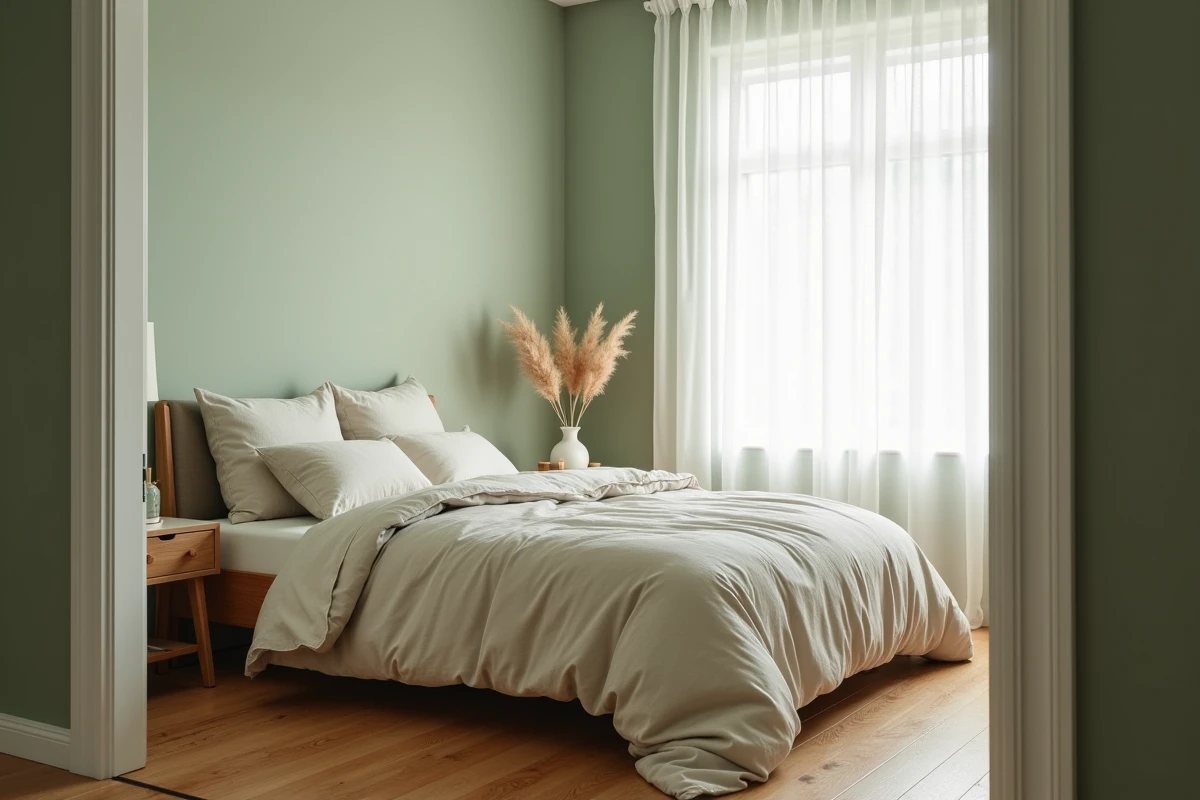
Smart LEDs, commonly found in bedrooms, allow for a transition from warm white (favorable for melatonin production) to cool white (which inhibits it). A blue-gray painted on the wall will appear more greenish under a cool LED and regain its soothing depth under a warm white at 2,700 K or lower.
For soothing paint to fulfill its role on the circadian rhythm, the choice of hue must be paired with the evening lighting setting. A sage green or powdery blue loses its calming effect if the room remains bathed in cool light after 9 PM. Programming connected bulbs to drop below 2,700 K an hour before bedtime allows wall pigments to reflect wavelengths compatible with falling asleep.
A comprehensive guide on the subject is available on the Murmures Déco website, detailing the associations between hues and types of lighting.
LRV and Soothing Colors: The Technical Criterion That Palettes Don’t Show
The LRV (Light Reflectance Value) measures the amount of light a surface reflects, on a scale from 0 (absolute black) to 100 (pure white). This figure conditions the perceived brightness in the room as much as the hue itself.
Feedback from luxury hospitality, based on a survey of 150 establishments, shows a growing preference for blue-grays with an LRV between 30 and 45 in couple’s rooms. These establishments report a reduction in complaints related to nighttime awakenings since adopting these hues.
The LRV range of 30-45 corresponds to a precise balance: enough reflection so the room does not feel oppressive, but not enough to create a stimulating effect. Hues that are too light (LRV above 70, such as pure white or bright straw yellow) reflect too much ambient light, including that from screens or night lights.
- Powdery blue (LRV around 40): a versatile shade that adapts to most room orientations and remains stable under warm lighting.
- Sage green (LRV around 35): a color that absorbs more light, suitable for bright rooms facing south or west.
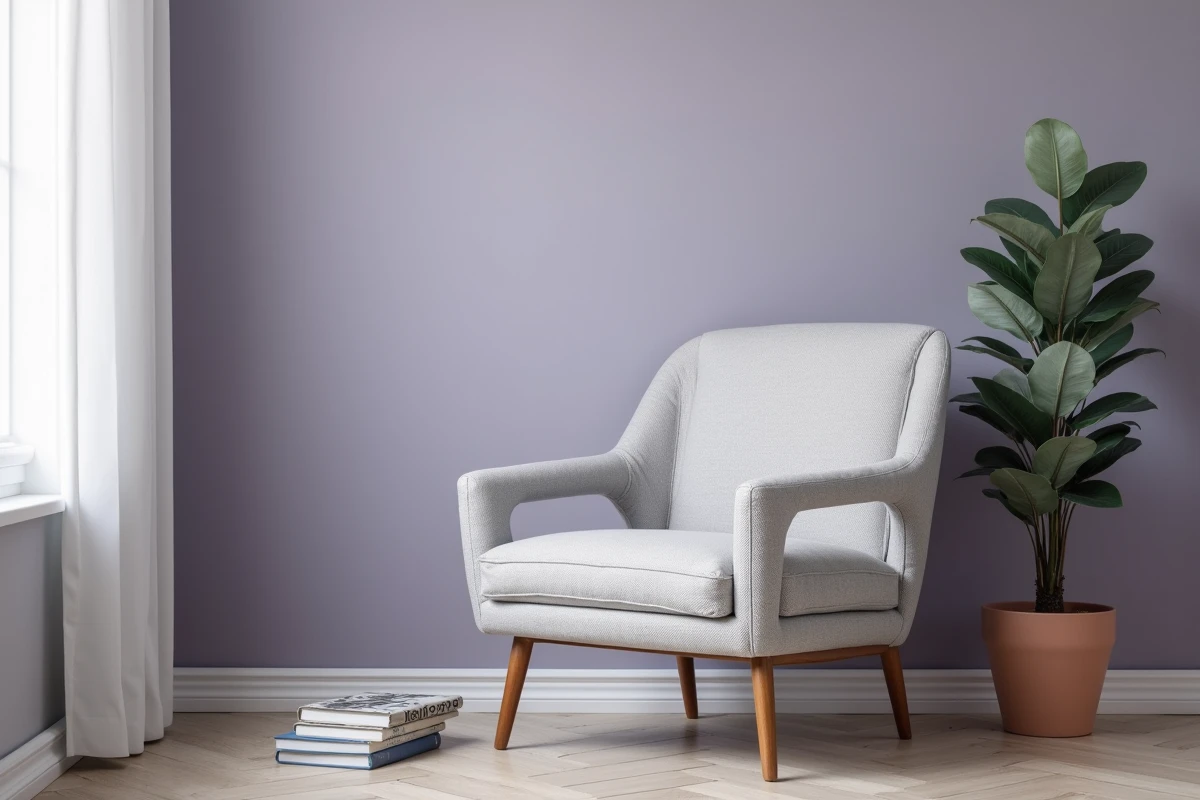
- Lavender gray (LRV around 38): an alternative for those who find blue too cold, with a subtle violet undertone that works well with woodwork.
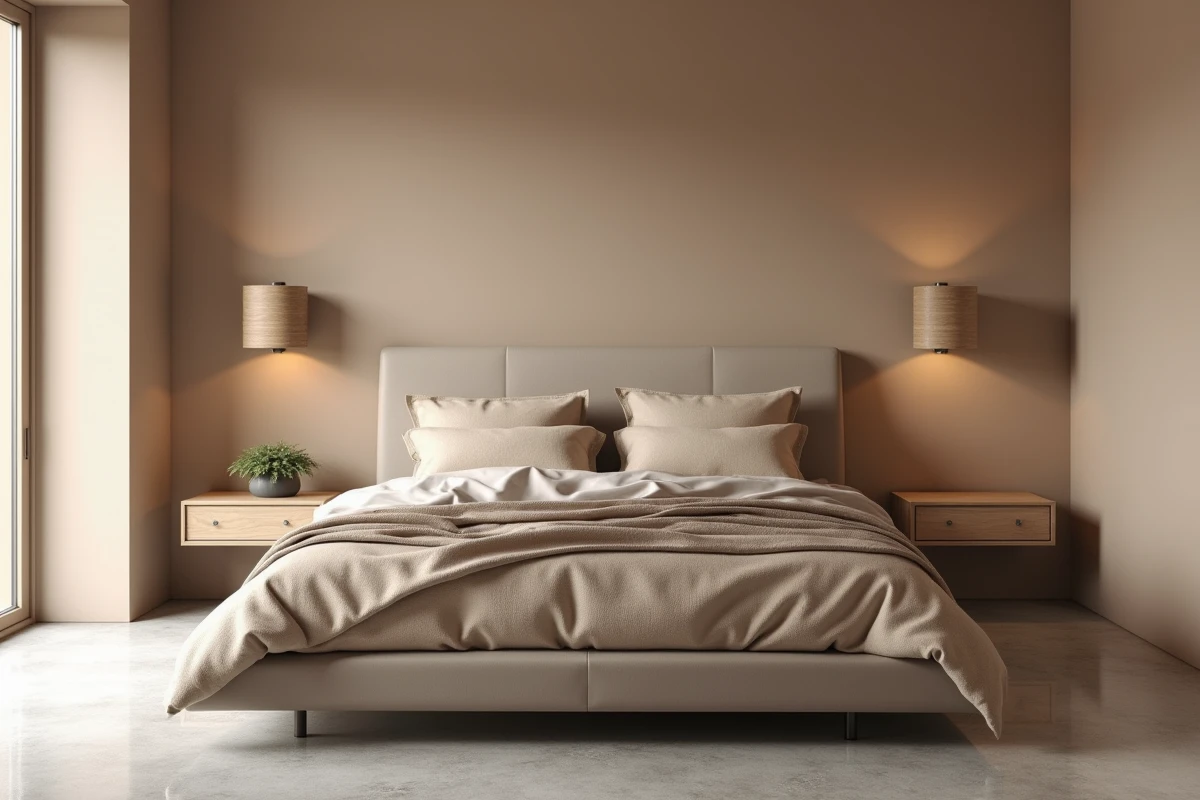
- Rosy beige (LRV around 45): the brightest shade in this range, suitable for small north-facing rooms.
Air Quality and Pigments: What the 2026 VOC Standard Changes
Regulation (EU) 2025/2847, effective since January 2026, sets the threshold for residual VOCs at a maximum of 5 g/L for interior bedroom paints. Before this date, the threshold was more permissive, and some so-called “eco-friendly” ranges actually contained higher levels.
The air quality in a closed room during eight hours of sleep directly impacts the depth of rest. VOCs (volatile organic compounds) irritate the respiratory mucous membranes and can cause micro-awakenings. A paint compliant with the 2026 standard improves nighttime air quality without the occupant being aware of it.
In practice, manufacturers have reformulated their ranges to maintain pigment performance while reducing solvents. Darker shades (midnight blue, forest green) have been the most challenging to adapt, as they require a higher concentration of pigments. Field reports vary on this point: some professional painters report slightly lower coverage on zero VOC dark shades, while others see no notable difference.
Five Adult Bedroom Shades to Test Based on Room Orientation
Rather than a list of ten colors without context, here are five hue-orientation combinations that take into account natural light and evening lighting.
North-Facing Room
The light here is cool and low. A warm beige or powdery pink (LRV 40-50) compensates for this coolness without making the room too dark. Avoid pure gray, which will accentuate the dull atmosphere.
South-Facing Room
The abundance of natural light allows for a shift to a sage green or a deeper blue-gray (LRV 28-38). These shades absorb excess brightness and create an enveloping ambiance by the end of the day.
East-Facing Room
Morning light is golden. A slightly pink or peach-tinted off-white captures this light without being harsh upon waking. An LRV around 55-65 works well.
West-Facing Room
Evening light is warm and orange. A lavender blue or bluish gray balances this dominance by absorbing the coppery hues of dusk. This orientation is where cool blues yield the best results for falling asleep.
- For each orientation, test the color with a sample painted on the wall (not just a color swatch) while observing the hue at three times: morning, afternoon, and under evening LED lighting.
- Compare the rendering with your connected lighting set to warm white (2,700 K) and in neutral mode (4,000 K) to anticipate the effect on your perception.
- Check the pot for compliance with Regulation (EU) 2025/2847, recognizable by the updated VOC pictogram in 2026.
Sleep depends on multiple parameters, and the wall color does not act alone but in combination with lighting and air quality. Choosing a soothing hue without checking the color temperature of your LEDs or the VOC compliance of the paint amounts to optimizing only one link in a chain that has three.