Passing through the Corinth Canal in Greece imposes strict schedules, often incompatible with classic itineraries. Some companies prohibit access to the ports of small villages on market days to limit the influx of travelers. Boat rental rates vary from simple to triple depending on the period, regardless of the actual weather, creating unexpected discrepancies even between consecutive weeks. In this context, anticipating reservations does not guarantee either the best stops or peace on board. However, a few organizational details can overturn the usual logic and optimize each step of the journey.
Heading to the Mediterranean: what you need to know before setting sail
Setting sail in the Mediterranean is not something to be improvised. A hint of planning can turn an ordinary trip into an exceptional one. Choosing the right time conditions the rhythm on board: May, June, September, or October offer calm and mild weather. Avoid July and August if your priorities are tranquility or budget; during these months, even the slightest Mediterranean cruise quickly feels like a marathon, ports fill up, prices soar, and the atmosphere shifts.
The itinerary must adapt to the winds and the crew’s skill level. The Mistral and the Bora, among others, impose their rules. Even seasoned sailors sometimes fear the Bonifacio Strait, where the wind can pick up unexpectedly. Make sure to gather information about the permits required in national parks like Maddalena, Kornati, or Cabrera, and take a look at the marina reservation procedures, which vary from port to port, especially during the beautiful days.
Before setting off, scrutinize the boat: anchor, chain, fenders, windlass… Every detail matters. Some ports, like Antibes, require this in black and white: show the insurance, the license, or stay at the dock. Anticipating your stops and their duration optimizes every moment in the sun, but the key remains to closely monitor the water on board and the state of the batteries. Sailing in the Mediterranean means accepting both its richness and its unpredictability, while paying attention to preparation and attention to detail.
What are the essentials for a successful cruise at sea?
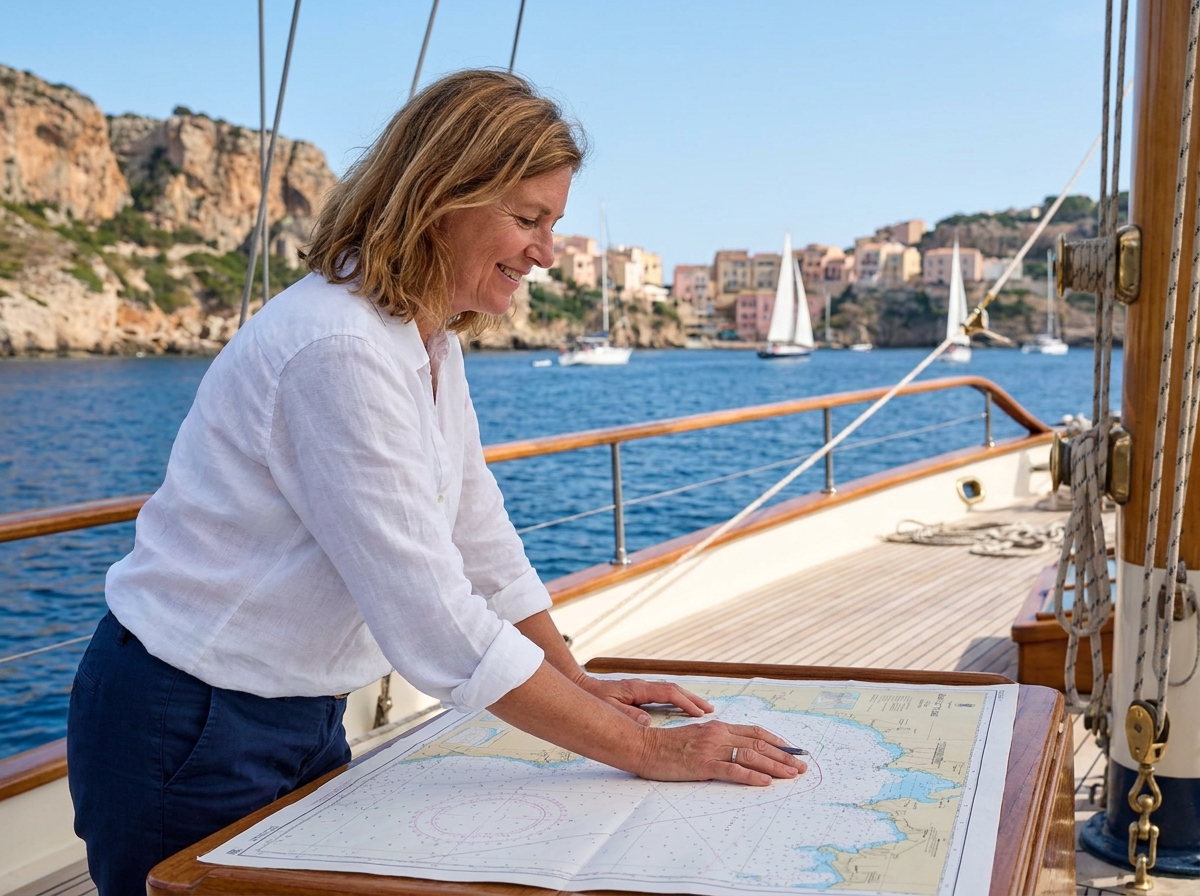
Organization touches on everything: safety, navigation, atmosphere on board. Assembling a crew and clearly defining responsibilities is fundamental. The skipper, who is both pilot and manager, must master maneuvers and keep a constant eye on the weather. Each crew member must find their place in the maneuvers so that everything flows smoothly.
Before casting off, check the documents: ID or passport, navigation license, insurance certificate, as some Mediterranean ports check everything at the entrance, especially in border areas or when approaching natural reserves.
Safety relies on a few essentials: life jackets for everyone, a functional VHF radio, and reliable anchoring (anchor, buoy, mooring lines). In very busy stopover points, also consider bringing gloves to handle the mooring lines without damaging your hands.
Maintaining autonomy is crucial: monitor the fresh water, every liter counts. Check the batteries as soon as possible, especially if the boat does not have solar panels. A well-stocked fridge, ice to keep provisions cool, and a dinghy to reach the shore from a discreet anchorage will make a difference. Also, remember to check the weather daily to adjust the route if necessary.
Several points should be reviewed before departure to limit unpleasant surprises along the way:
- Crew organization: define who does what in advance
- Water and energy management: monitor and anticipate to avoid shortages
- Documents at hand: ID papers and permits always accessible
- Safety equipment: life jackets, VHF, gloves, and dinghy if needed
- Weather anticipation skills: consult and adjust continuously
Dream stops and sailor tips to fully enjoy your first adventure
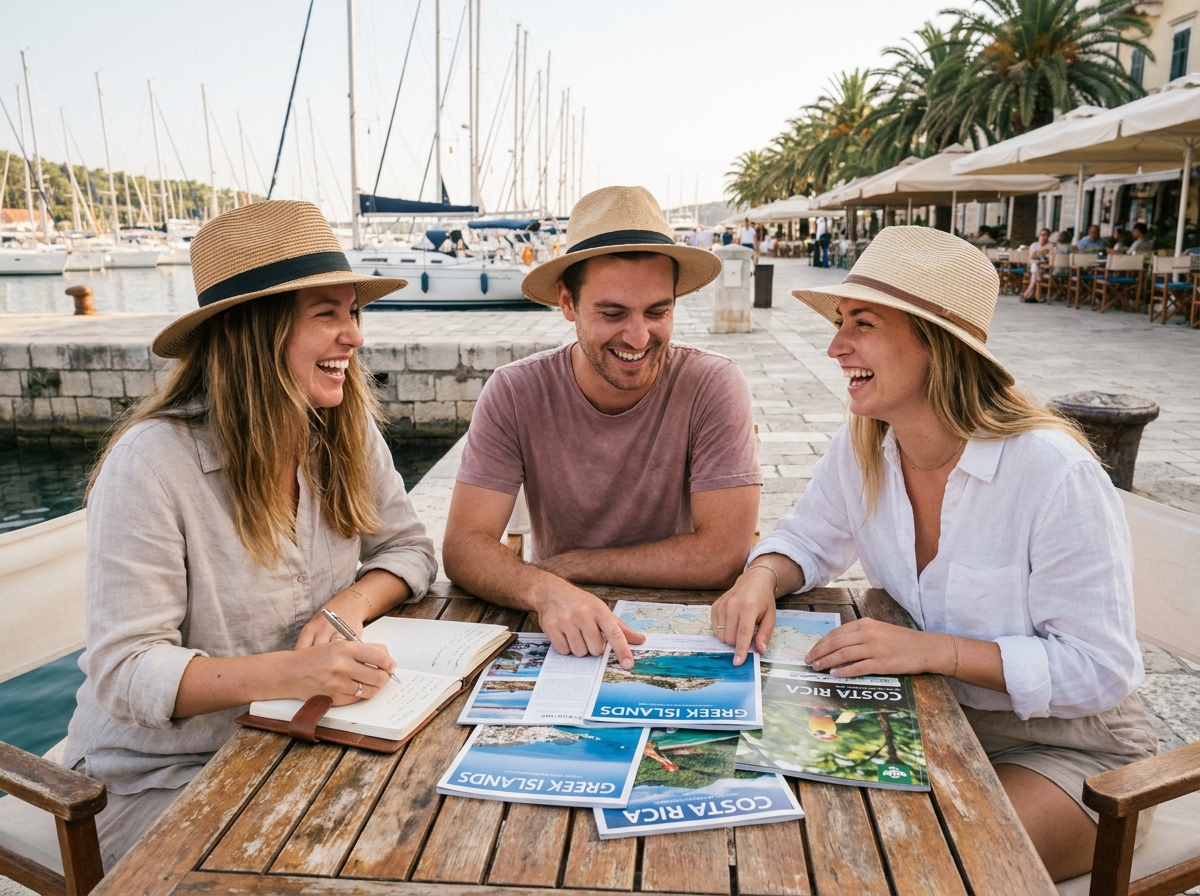
The Mediterranean unfolds a festival of stops for you: timeless Rome, mythical Athens, dazzling Santorini, Dubrovnik with its ramparts, and Barcelona with all its contrasts… At each stop, you embrace an atmosphere, typical markets, and coves that you will remember for a long time. Sailing from one shore to another also changes the ambiance: feel the Corsican maquis, follow the white cliffs of the Cyclades, walk through the lively streets of Split, and stop before the Neapolitan elegance.
To get started, focus on routes suitable for the season and the crew’s experience. Between May and June or from September onwards, calm returns to the water, the weather becomes milder, and anchorages become accessible again. The Balearic Islands then offer their peaceful embrace, while Sardinia and Sicily reveal themselves away from the crowds. If you set off in the heart of summer, reserve marina spots in advance, as the most popular ports fill up quickly.
Regulars come equipped: a compact camera protected from moisture, a polarizing filter, a mini-tripod, and spare batteries tucked into a waterproof bag. If the budget allows, a cabin with a balcony offers a permanent show, with sunrise over the sea or golden light on the coasts. For onshore excursions, prioritize freedom: a scooter or local taxi is ideal to escape crowded buses and discover sites at your own pace; Knossos, Pompeii, and Mallorca’s beaches truly reveal themselves only in tranquility.
To savor your stops, consider these tips:
- Itinerary selection: adjust it according to the weather and expected duration
- Choice of stops: vary between lively ports and wild coves
- Photography equipment: prioritize lightness and moisture resistance
- Transport on land: aim for autonomy to explore better
The Mediterranean always retains an element of mystery, even for seasoned sailors. What unfolds between two stops, around a forgotten cove, will often remain etched long after the final mooring.