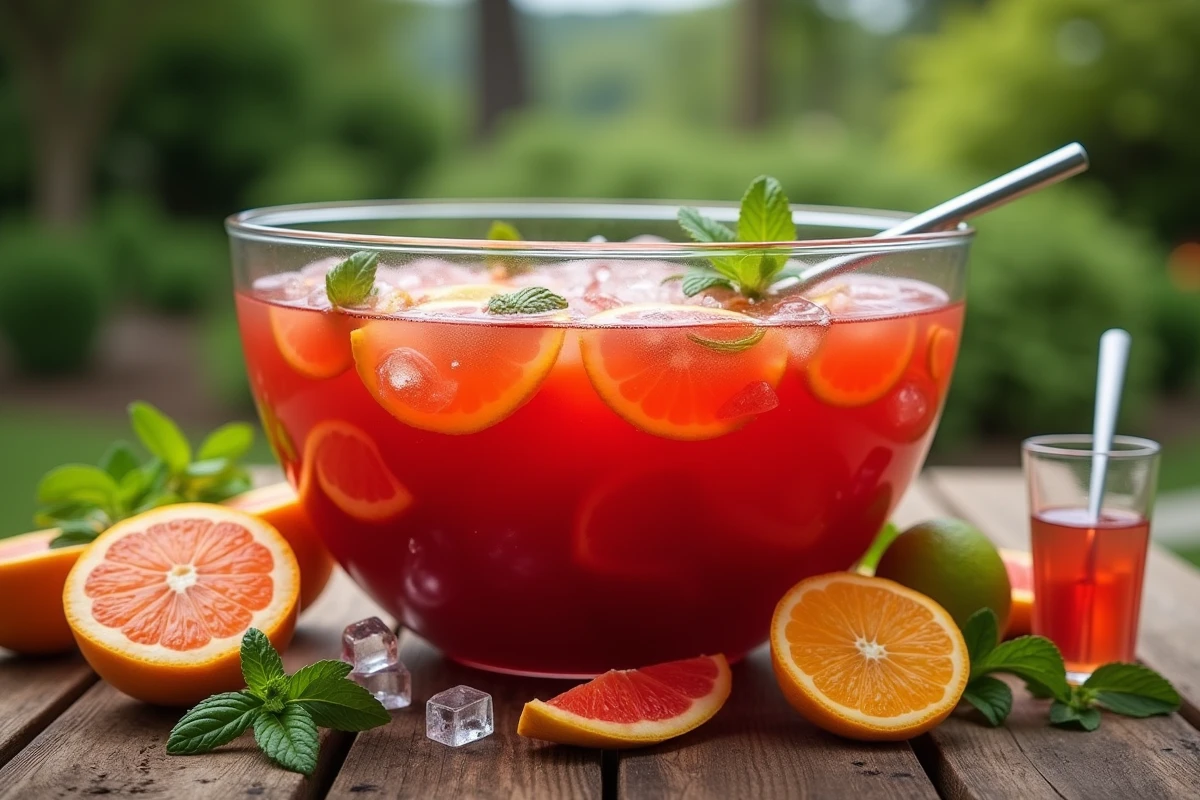
A bowl of punch has been sitting on the table since the beginning of the evening. Two hours later, the ice has melted, the temperature has risen, and someone wonders if the drink is still good. The question of keeping punch at room temperature arises at every party, picnic, or extended happy hour.
What happens to punch left out in the open
A homemade punch typically mixes rum, fruit juice, sugar, and sometimes coconut milk. Each of these ingredients reacts differently to heat and exposure to air.
Fresh fruit juice is the weak link. Without refrigeration, the natural sugars become a breeding ground for yeast and bacteria. The higher the ambient temperature, the faster this process accelerates.
Alcohol, on the other hand, acts as a brake. Rum slows down microbial proliferation due to its ethanol content. A punch with a high alcohol content lasts longer than a lighter or non-alcoholic version. But alcohol does not sterilize the drink: it simply delays degradation.
There is also oxidation. When exposed to air, the fruit aromas deteriorate, the color changes, and the taste becomes flat or sour. That’s why a punch that seemed perfect at the beginning of the evening can have an unpleasant aftertaste a few hours later, even if it’s not dangerous.
When looking to keep punch at room temperature, it’s important to keep these three factors in mind: the fragility of the juices, the limited power of alcohol, and the effect of oxidation.
Punch with or without coconut milk: preservation changes

Have you ever noticed that a coconut punch goes bad faster than a classic citrus punch? Coconut milk contains vegetable fats that can go rancid at room temperature. This fat accelerates the degradation of the mixture.
A punch made with rum, lime, and cane sugar, without dairy or plant milk, lasts significantly longer outside the refrigerator. The practical rule:
- Punch without milk or cream: consumable within a few hours after preparation at room temperature, provided the room is not overheated
- Punch with coconut milk or cream: should be refrigerated as soon as serving is finished, as fats and proteins promote bacterial growth much faster
- Non-alcoholic punch (fruit cocktail): the most fragile of all, to be treated like fresh juice and kept cold at all times
The type of recipe directly affects how long the punch remains safe to drink. A very sweet and low-alcohol cocktail accumulates risk factors.
Concrete signals to know if a punch has gone bad
Rather than counting the hours, rely on your senses. The nose often detects the problem before the tongue.
A sour or vinegary smell indicates fermentation. The yeasts present in the fruit juices convert sugars into alcohol and gas. The punch may then slightly fizz or emit a vinegar-like odor.
Visually, a cloudy film on the surface or suspended particles that weren’t there initially are warning signs. A marked color change (browning, dull appearance) indicates advanced oxidation.
On the palate, a sharp acidity that wasn’t in the original recipe confirms that the drink has gone bad. If in doubt, do not taste and discard the rest.
Refrigeration and bottling: what extends the duration
The refrigerator remains the best ally for prolonging the life of homemade punch. The cold slows the multiplication of microorganisms and hinders the oxidation of the fruits.
To optimize this preservation, the container matters. A punch poured into a closed glass bottle, filled to the brim to limit air contact, lasts much longer than an open bowl covered with plastic wrap.
- Use clean glass bottles with a tight seal rather than an open container
- Fill the bottle almost to the top to reduce the air pocket and limit oxidation
- Keep the punch in the refrigerator as soon as it is no longer actively served
- Avoid dipping a used glass back into the communal bowl (oral bacteria contaminate the mixture)
A well-bottled and refrigerated punch remains enjoyable to drink significantly longer than a punch left in a bowl on the table. The difference in taste quality is clear.
Tip for large quantities
Prepare the base (rum, sugar, spices) in advance in a closed bottle. Add fresh fruit juices and coconut milk only at serving time. The alcoholic base keeps very well, while the fresh ingredients are the ones that degrade.
Punch recipe and preservation: adjusting proportions
The alcohol content directly influences the stability of the mixture. A festive punch that is very fruity with little rum is more fragile than a traditionally measured planter punch.
For a punch intended to stay on an outdoor table for a few hours, favor a recipe with a sufficient proportion of alcohol. Sugar, on the other hand, does not have a significant preservative effect in a liquid cocktail, contrary to what one might think by analogy with jams.
Melting ice dilutes the alcohol and accelerates degradation. If serving lasts a long time, place the ice in a separate tray rather than directly in the punch. Everyone can then serve themselves in their glass.
A punch prepared the day before and stored in a closed bottle in the refrigerator even gains in flavor: the aromas of fruit, rum, and spices have time to blend. This is the principle of maceration, which works cold without posing any health issues as long as the mixture remains refrigerated.
Punch remains a convivial and generous drink, but its composition based on fresh fruits makes it more perishable than one might imagine. Keeping the bowl cool between servings, bottling the leftovers quickly, and trusting your nose before re-serving a leftover punch from the day before: these simple reflexes are enough to enjoy the recipe without unpleasant surprises.