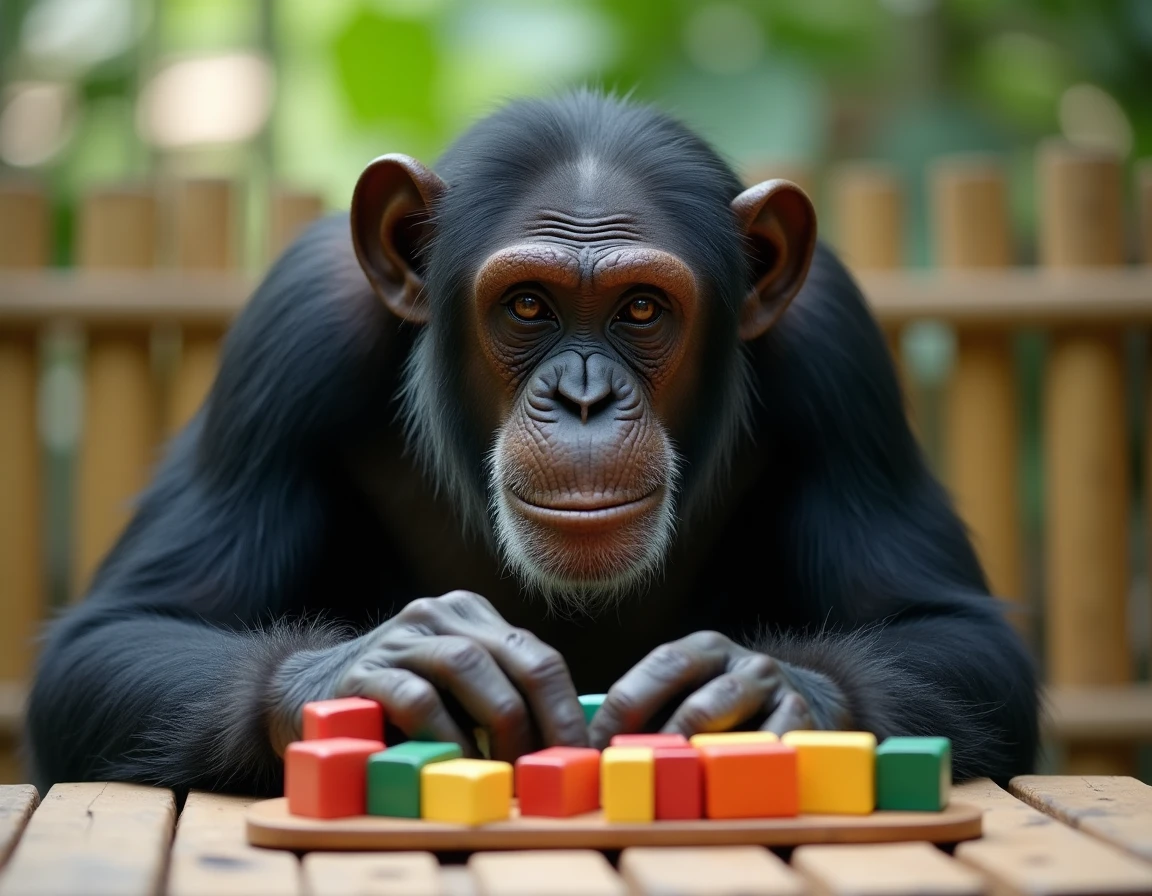
Rankings of intelligent animals circulate everywhere, from mainstream magazines to social media. They almost always place the same species on the podium: dolphins, chimpanzees, crows. These rankings rely on criteria that are rarely explained, and recent work in cognitive ethology shows that the reality is more fragmented than these lists suggest.
Ranking Bias and Limitations of Animal Intelligence Rankings
A ranking implies a single scale. Animal intelligence does not work that way. Recent research emphasizes that intelligence varies greatly depending on the evaluated domain: social, spatial, technical, or communicative. An animal may excel in solving social problems and perform poorly on a mechanical puzzle.
Goats and sheep, for example, achieve very good results in social problem-solving, yet they almost never appear in mainstream rankings. This bias is partly due to the choice of tests: most historical protocols were designed for primates or cetaceans, which mechanically advantages these groups.
To explore the top intelligent animals from a scientific perspective, one must first accept that no single framework covers the diversity of forms of intelligence in the animal kingdom.
Another factor of distortion relates to proximity to humans. Species whose behavior resembles ours (tool use, mirror recognition, vocal communication) attract more attention from researchers and the public. The cognitive abilities of an octopus or a cuttlefish, based on a radically different nervous system, remain under-documented by comparison.
Mirror Test and Self-Awareness: Results that Challenge Certainties
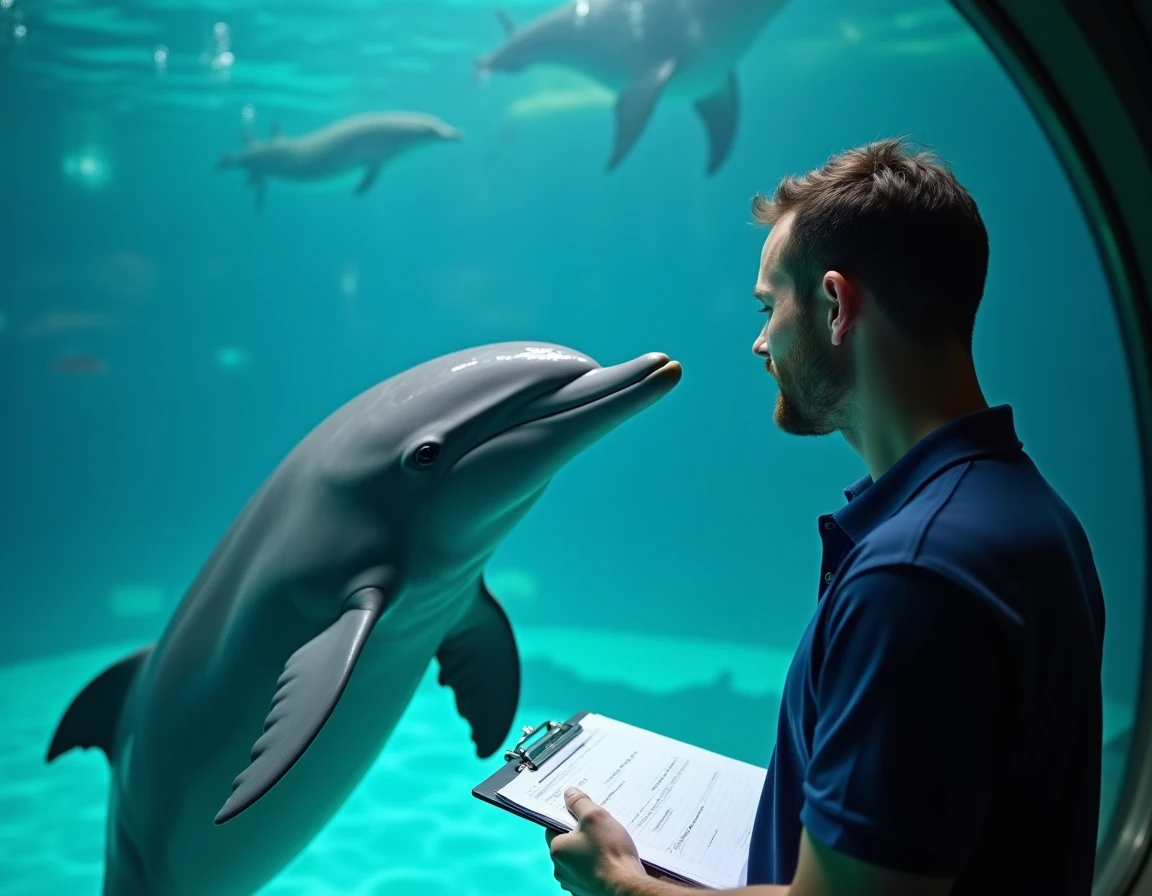
The mirror test, designed in the 1970s, remains one of the most publicized protocols for assessing animal self-awareness. The principle is simple: a mark is placed on the animal’s body in a non-reflective area. If it uses the mirror to examine or touch this mark, it is considered to recognize itself.
For a long time, only great apes, dolphins, and a few corvids passed this test. Recent studies show that manta rays pass the mirror test, suggesting a form of self-awareness in a fish. This result challenges the idea that this ability is reserved for species with large brains or mammals.
The available data do not allow us to conclude that passing the mirror test translates to the same type of awareness in a manta ray as in a chimpanzee. The protocol measures observable behavior, not a mental state. This nuance is often absent from popular rankings, which transform an experimental result into a rank in a list.
Animal Culture and Social Learning: What Touch Screens Reveal
A recent area of research focuses on cultural transmission between individuals of the same species. Studies published between 2022 and 2024 show that African grey parrots, crows, and rats spontaneously learn from each other on interactive digital platforms, such as touch screens or connected dispensers.
This setup allows for real-time measurement of how a behavior learned by one individual spreads within a group. This is referred to as “animal culture,” a concept almost absent from mainstream rankings that focus on individual performances.
This collective dimension of intelligence changes the perspective. An isolated crow solving a puzzle is impressive, but a group of crows transmitting a problem-solving technique to the next generation raises a different question: is the intelligence of a species measured by the individual or the group?
Underestimated Species in Traditional Rankings
Several animal groups remain in the blind spot of usual rankings despite documented abilities:
- Sheep memorize dozens of faces (both sheep and human) and retain them for several years, a social memory performance rarely highlighted.
- Chickens distinguish sets and sort them in ascending order, which implies a form of elementary numerical reasoning.
- Pigs understand the concept of reflection by the age of six weeks, well before most primates at the same developmental stage.
- Cephalopods (octopuses, cuttlefish) solve mazes and use tools with a decentralized nervous system, lacking a cerebral cortex.
Animal Intelligence and Legal Protection: An Increasingly Direct Link
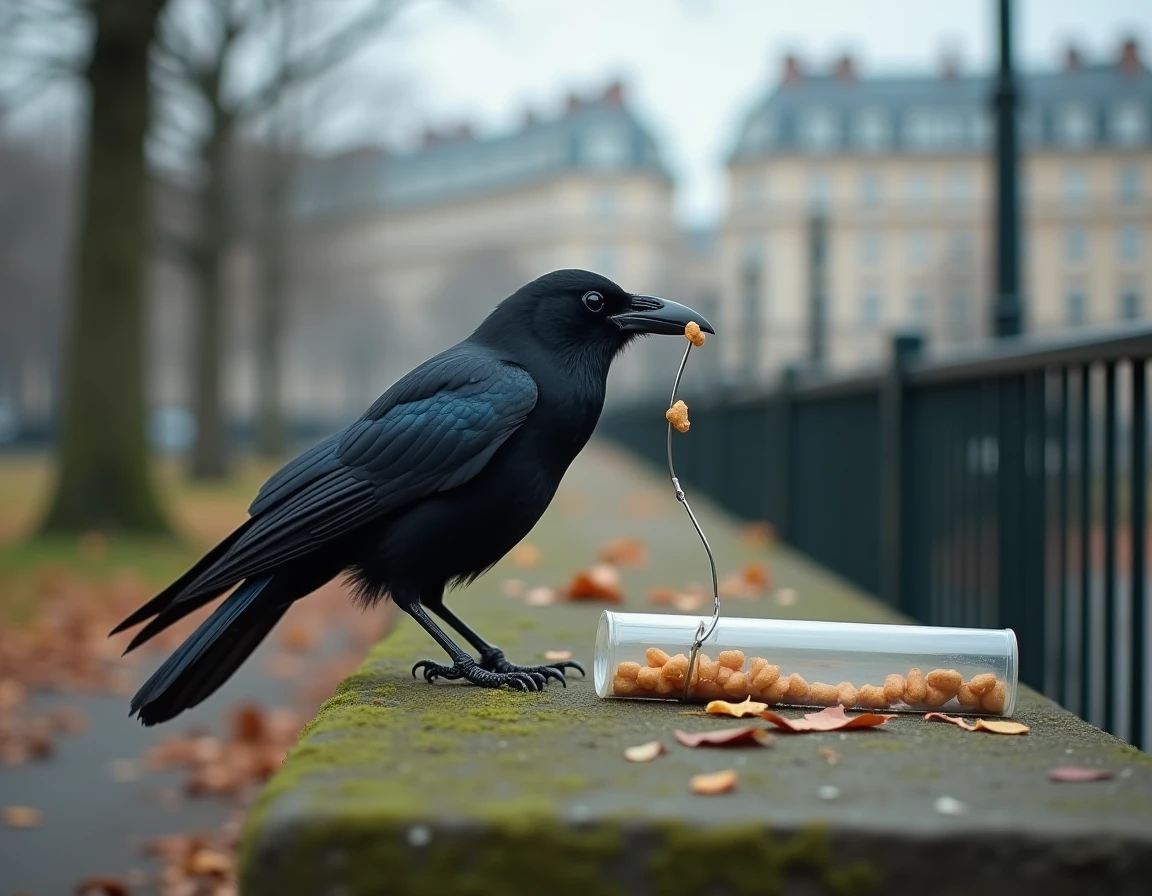
Since the early 2020s, several research teams in Europe have integrated cognitive abilities into regulatory debates on animal welfare. Species long deemed “not very intelligent” (fish, cephalopods, crustaceans) are now benefiting from assessment protocols that include tests of memory, learning, and pain sensitivity.
This evolution leads to a gradual extension of legal protection for these species. The link between cognitive research and animal law is no longer theoretical: laboratory results directly inform legislative discussions.
However, field feedback diverges on how to apply this knowledge. A farmer, a researcher, and a legislator do not read the same implications from the demonstration that a fish can learn by observation. The translation of scientific data into protection standards remains a slow process, marked by economic and ethical trade-offs.
Rankings of intelligent animals will continue to circulate because they satisfy a legitimate curiosity. Their main limitation remains the single scale they impose on incomparable forms of intelligence. Recent advances in animal culture, self-awareness in fish, and social learning on touch screens show that the relevant question is no longer “which animal is the most intelligent,” but “intelligent for what, and in what context.”