A hedge of hornbeams planted facing north will never yield the same result as a hedge of photinias on a southwest-facing facade. Shaping your hedges first means accepting that the outcome depends less on the pruner than on the terrain, orientation, and the time you can realistically devote to it each season.
Evergreen or deciduous hedge: what exposure changes concretely
In a site exposed to west winds, a free hedge of privet or eleagnus retains its foliage all year round and filters gusts without breaking. In contrast, the same hedge planted in a shaded and damp courtyard withers, loses density at the base, and allows prying eyes through by the second year.
The choice between evergreen and deciduous is made here. An evergreen is suitable for windy exposures or the need for permanent privacy, while a deciduous like hornbeam or beech, which retains its dry leaves in winter, is sufficient for a less utilized garden backdrop. Feedback on this point varies by region, particularly in oceanic climates where some evergreens struggle with prolonged winter moisture.
Useful resources to refine this choice of shape can be found at sculpte-haie.com, particularly for deciding between a trimmed silhouette and a free form based on the garden’s configuration.
Trimmed shape or free form: the real criterion is maintenance time
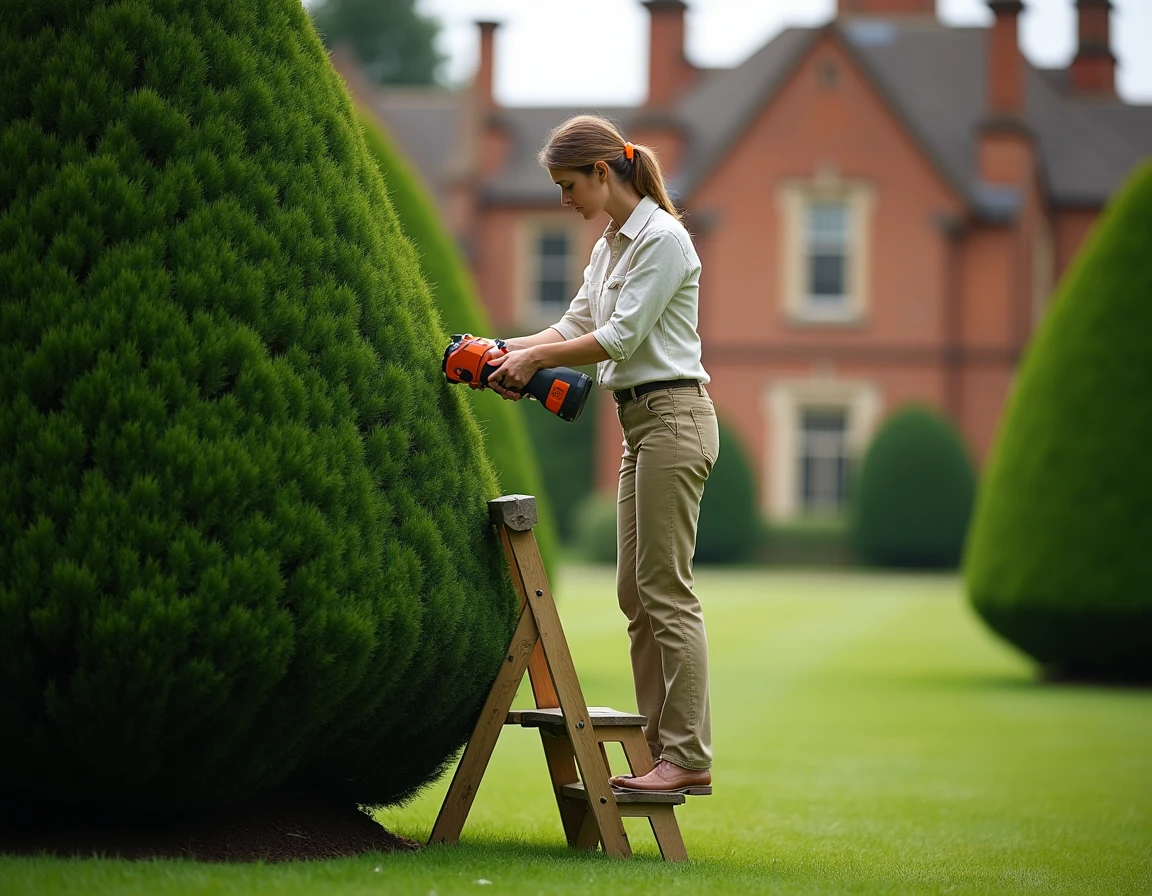
A hedge trimmed into a strict curtain (boxwood, yew, laurel) requires at least two trimming sessions per year, sometimes three in a mild climate. For a few meters of linear hedge, this is manageable. Beyond that, we are talking about several hours of work each session, not to mention the disposal of green waste.
Architectured hedge: for whom and under what conditions
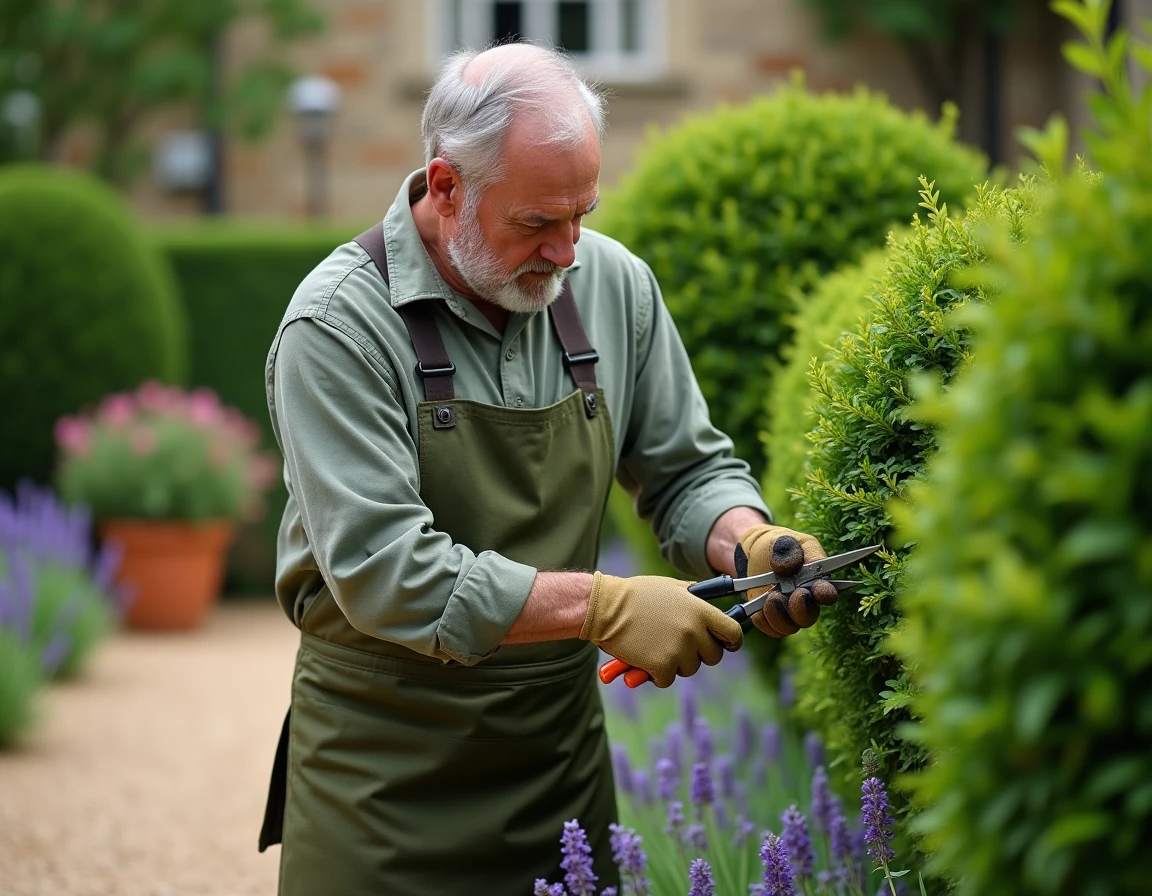
The geometric hedge is justified over short sections, for example, to frame an entrance or border a terrace. Reserving strict trimming for portions visible from the house allows you to concentrate effort where the effect truly matters.
The yew is the best candidate for sharp shapes. Its slow growth limits interventions, and it tolerates both sun and partial shade. Boxwood, once the reference, now poses a known health issue (boxwood moth) that makes its use riskier.
Free hedge: less work, more biodiversity
A wild hedge composed of several species (hazel, viburnum, dogwood, elder) is only trimmed once a year, at the end of winter. It accepts poor soils and attracts beneficial wildlife to the garden.
A common compromise is to mix the two approaches:
- A trimmed section at the front, spanning three to five meters, to structure the garden entrance
- A free extension along the rest of the linear hedge, with local species that bloom at different times
- Deciduous shrubs (hornbeam, beech) to maintain a visual screen even in winter without additional trimming
Year-round privacy hedge: effective associations based on climate
The classic mistake is to plant a single row of thujas hoping to solve the privacy issue. A common result: a mono-specific hedge that browns at the base after a few years, leaving a gaping hole at eye level.
Alternating evergreens and semi-evergreens in two rows creates a dense and resilient screen. For example, a first row of eleagnus or photinias doubled with a row of tall grasses (miscanthus) provides constant opacity with a less monotonous appearance than a uniform green wall.
Adapting the choice to the local climate
In continental areas, prolonged frosts weaken the palm laurel and photinia. They are preferred over holly, pyracantha, or spindle, which resist negative temperatures better.
In a Mediterranean climate, the problem reverses: it is the summer drought that damages hedges. Pittosporum, laurel-tin, and filaire can survive without watering once well established. Choosing species adapted to local rainfall reduces maintenance by at least half compared to water-demanding plants.
Hedge shape and regulations: height, distance, and neighborhood conflicts
The shape of a hedge is not decided solely based on aesthetic criteria. The civil code imposes planting distances from property boundaries. For plantings exceeding two meters in height, the minimum distance is generally two meters from the fence. Below two meters, half a meter is sufficient.
These rules vary according to local customs and municipal urban planning regulations. Before planting, one should consult the local urban planning plan of their municipality to check for any additional restrictions.
- A hedge trimmed to less than two meters can be planted fifty centimeters from the boundary, which is suitable for small gardens
- A free hedge that naturally grows to three or four meters must respect the two-meter setback, which takes up space
- In housing developments, the specifications may impose specific species or maximum heights
Checking local rules before choosing the shape avoids forced trims and conflicts with neighbors that rarely resolve amicably once the hedge is well established.
The ideal shape of a hedge does not exist in itself. It depends on exposure, climate, the actual time one is willing to devote to it, and the regulatory constraints of the land. Starting from these four parameters before choosing species is the most reliable method to achieve a lasting result without turning gardening into a chore.