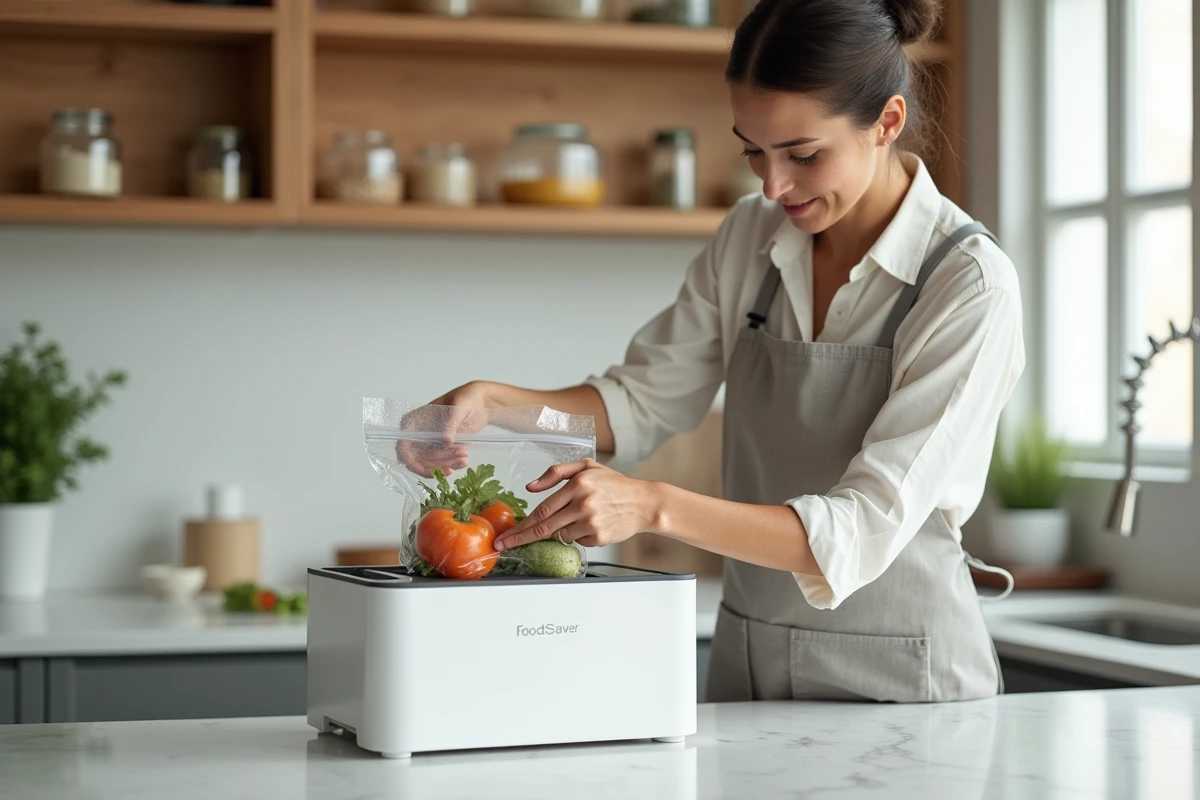
The FoodSaver V2860 remains one of the most sought-after home vacuum machines online, including for its user manual. It was launched several years ago, but the guides continue to be reissued and consulted, indicating that users still encounter concrete difficulties on a daily basis. Understanding the subtleties of this device prevents sealing errors, failed suction, and premature food spoilage.
Suction Channel and Drip Tray: The Unknown Weak Points of the FoodSaver V2860
Most vacuum sealing failures with the V2860 do not stem from a defect in the device but from a clogged suction channel. When liquids or food residues back up into the conduit, the pump loses efficiency and the sealing of the bag becomes uneven.
The drip tray, located under the lid, is designed to intercept these overflow issues. Too many users forget to empty or clean it after each session. A dirty drip tray significantly reduces the suction power, sometimes to the point of making the device unusable without any error light illuminating.
For cleaning, simply remove the tray, rinse it with warm soapy water, and dry it completely before replacing it. The suction channel itself can be cleaned with a damp cloth, without immersing the device. The user manual for the FoodSaver V2860 details this procedure, but it appears in the last pages, which explains why it often goes unnoticed.
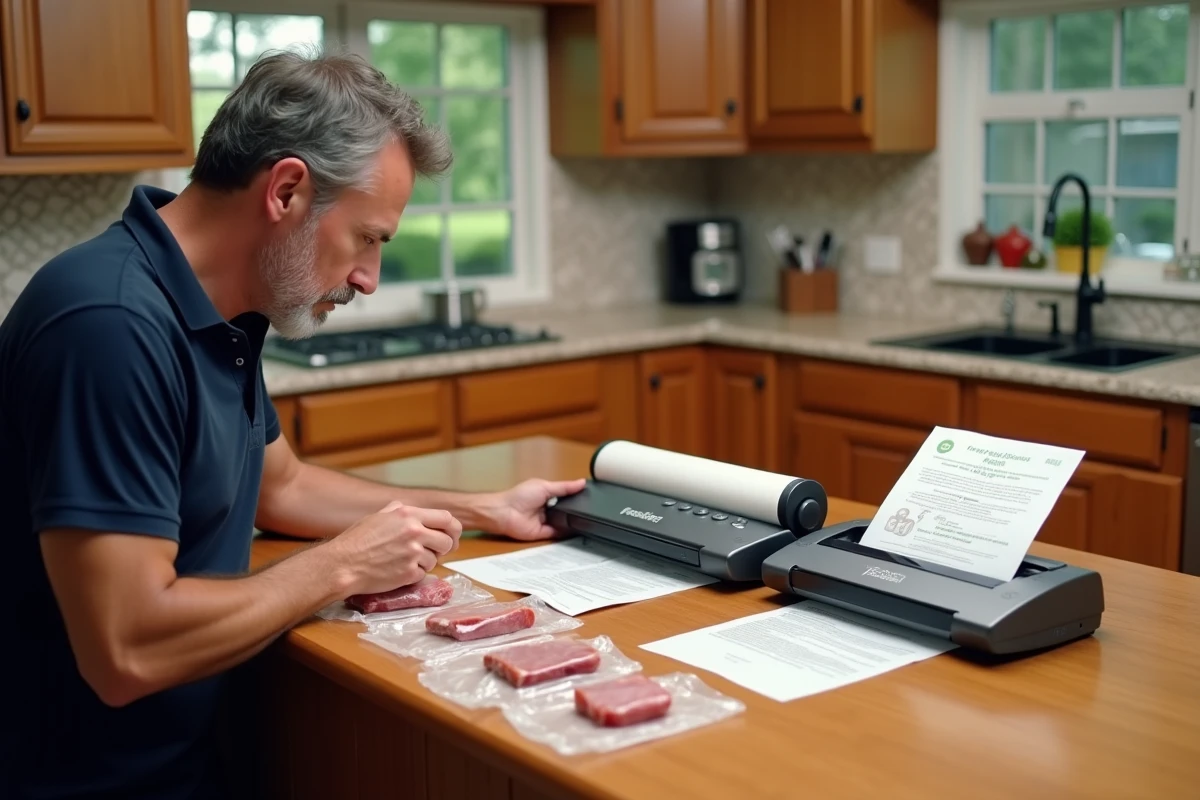
Sealing FoodSaver Bags: Settings and Common Mistakes
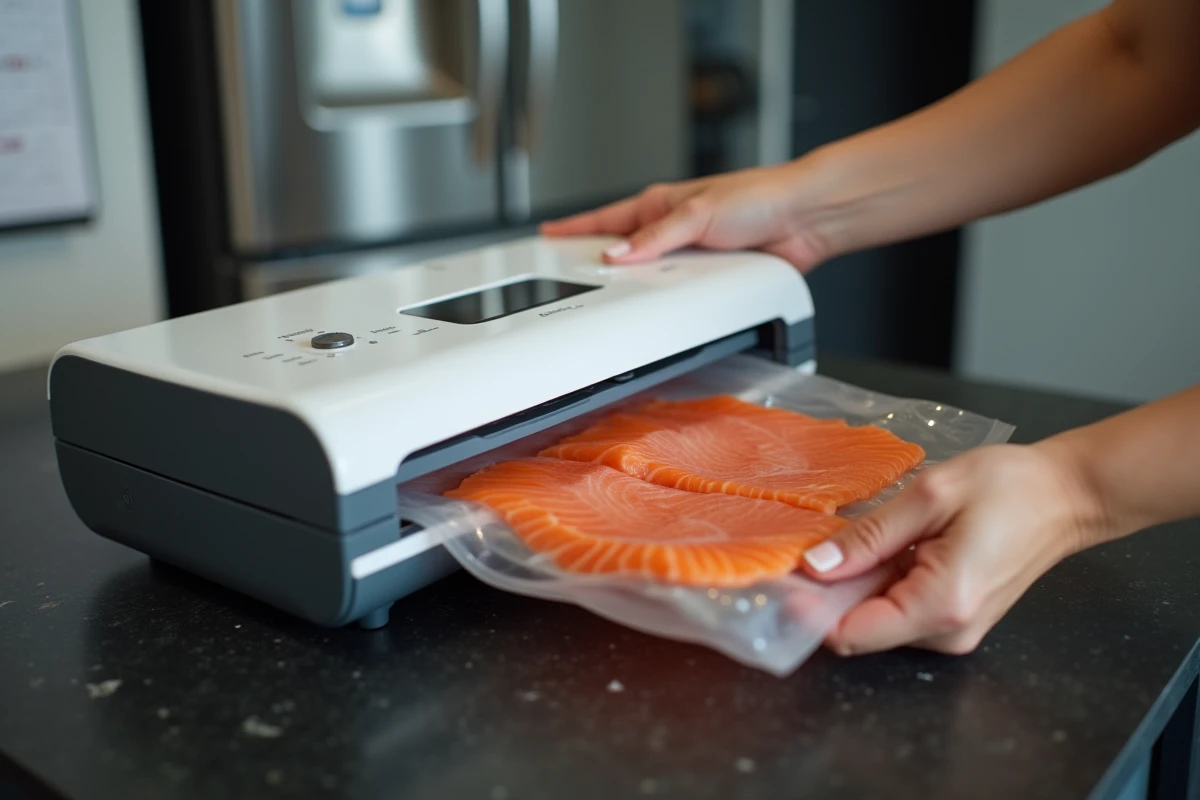
The sealing strip of the V2860 heats up significantly during the sealing process. Touching this area right after sealing can cause burns, a warning that the manual repeats several times.
Beyond safety, the quality of the seal depends on two factors that users often overlook:
- The end of the bag must be perfectly smooth and free of creases before being inserted into the sealing area. A crease, even slight, creates a channel through which air can enter within a few days.
- The sealing area must remain clean and dry. Grease or moisture on the strip prevents proper fusion of the plastic and produces a weak seal.
- After each use, a quick wipe with a dry cloth on the sealing strip extends its lifespan and ensures consistent seals.
A poorly sealed bag can be identified by gently pressing it: if air escapes along the seam, it needs to be redone by cutting the end and making a clean seal again.
Rolls or Pre-Cut Bags
The V2860 works with pre-cut FoodSaver bags and rolls. Rolls offer more flexibility to adjust the bag size to the food, but they require an initial seal to close one side before filling. This extra step increases the risk of poor sealing if the technique is not mastered.
Pre-cut bags are more expensive per meter, but their sealing reliability is superior for occasional users. The choice between rolls and pre-cut bags mainly depends on the frequency of use.
Storing Moist Foods: The Main Limitation of Home Vacuum Sealing
The manuals for the V2860 primarily guide towards dry or slightly moist foods. This is not by chance. Liquids remain the main cause of failure in home vacuum sealing. When a food releases juice during suction, the liquid backs up into the channel, compromising the seal and clogging the mechanism.
Several techniques can help circumvent this constraint:
- Partially freeze the food before vacuum sealing. A piece of marinated meat placed in the freezer for about thirty minutes releases much less liquid during suction.
- Fold the end of the bag outward to create a lip that prevents splashes from rising toward the sealing area.
- Use compatible FoodSaver containers instead of bags for liquid preparations like soups or sauces.
Field feedback varies on the actual effectiveness of these techniques with the V2860 compared to newer generation machines, which incorporate more sophisticated wet and dry modes. The V2860 has a basic setting, but its management of very moist foods remains limited compared to current models with enhanced automatic detection.
Often Ignored Electrical Safety Precautions
The manual emphasizes a point that many users consider secondary: do not use an extension cord with the V2860. The vacuum pump draws a peak current at startup, and an unsuitable extension can cause overheating of the cable or a drop in voltage that weakens the suction.
Another neglected guideline: always unplug the device after each use. The V2860 does not have an intelligent standby mode. Leaving the device plugged in continuously unnecessarily stresses the internal components.
The power cord should never hang from a countertop or come into contact with hot surfaces. If the cord is damaged, the manual specifies that it must be replaced by an authorized service center, not by the user.
Accessories and Compatibility
Jarden Consumer Solutions, the manufacturer behind the FoodSaver brand, recommends using only accessories from the range. Generic bags and rolls may work, but their plastic thickness varies and the sealing quality is not guaranteed with the heating strip of the V2860.
The fact that this model continues to generate so many online searches, including for reissues of its manual in 2026, indicates an active installed base. Replacement parts and consumables remain available, extending the useful life of the device beyond what its age might suggest.