Contrary to popular belief, a diploma alone does not guarantee access to the profession of professional photographer. Some technical specializations, although undervalued, offer quicker opportunities than the most renowned generalist programs.
The constant evolution of tools requires regular updates of skills, even for the most experienced. Many professionals start with short training courses and then complement their journey with targeted workshops or specific certifications. Training choices directly influence the diversity of accessible missions as well as the ability to adapt to the market.
Understanding the stakes of photography training today
Training in photography is no longer a risky option. To embrace the life of a professional photographer, or for those considering a new direction, one must navigate an increasingly demanding sector. Technical skills are no longer enough; versatility, creativity, and mastery of digital tools take precedence. Specialized programs, such as the BTS photography (see the article “How can the BTS photography influence my career in the professional photography sector? – Career Trotter”), shape personalities capable of decoding the complexity of image professions.
Whether coming from a general or technical baccalaureate, future photographers seek training that is grounded in reality. Funding mechanisms like the CPF allow access to tailored programs, often custom-built. Many opt for hybrid solutions: a few academic modules, immersive internships, sometimes alternating work to accelerate entry into the field.
The professional retraining appeals to a growing audience, driven by easy access to digital tools and recognition of atypical profiles. Prestigious schools, such as the École nationale supérieure or the Supérieure des arts décoratifs, now coexist with short formats focused on practice and integration. This diversity of offerings allows everyone to build a photographic identity that stands up to market expectations.
Here are some options available to move forward:
- Photography training compatible with public or private funding schemes
- Programs designed to support a professional retraining
- Combined development of technical skills and artistic sensitivity
What skills to develop to succeed in professional photography?
Starting as a professional photographer is not just about handling a DSLR or having an eye for detail. Training, whether chosen after high school or as part of a professional retraining, emphasizes the complementarity between technical knowledge and artistic expression.
It all begins with the fundamentals: understanding light, mastering shooting, selecting the right lenses, and precisely adjusting settings (shutter speed, aperture, ISO). This is complemented by mastering editing software such as Adobe Photoshop Lightroom, essential for giving images a professional touch. Interpreting and enhancing a photo is what distinguishes an amateur from a seasoned practitioner.
The market now seeks specialists: fashion, reportage, architecture, portrait, culinary photography… Training encourages refining one’s image culture, questioning framing choices, and developing a personal perspective.
Some key learning areas stand out:
- Technical mastery: shooting, post-production, color management
- Flexibility and adaptation to client demands
- Human skills to orchestrate a shoot or collaborate effectively
- Creativity, critical sense, and autonomy in project selection
Deepening one’s photography knowledge also involves understanding commercial aspects, negotiating with confidence, monitoring trends, and anticipating changes in the profession. It is agility, a thirst for innovation, and artistic rigor that produce professionals capable of enduring in a competitive environment.
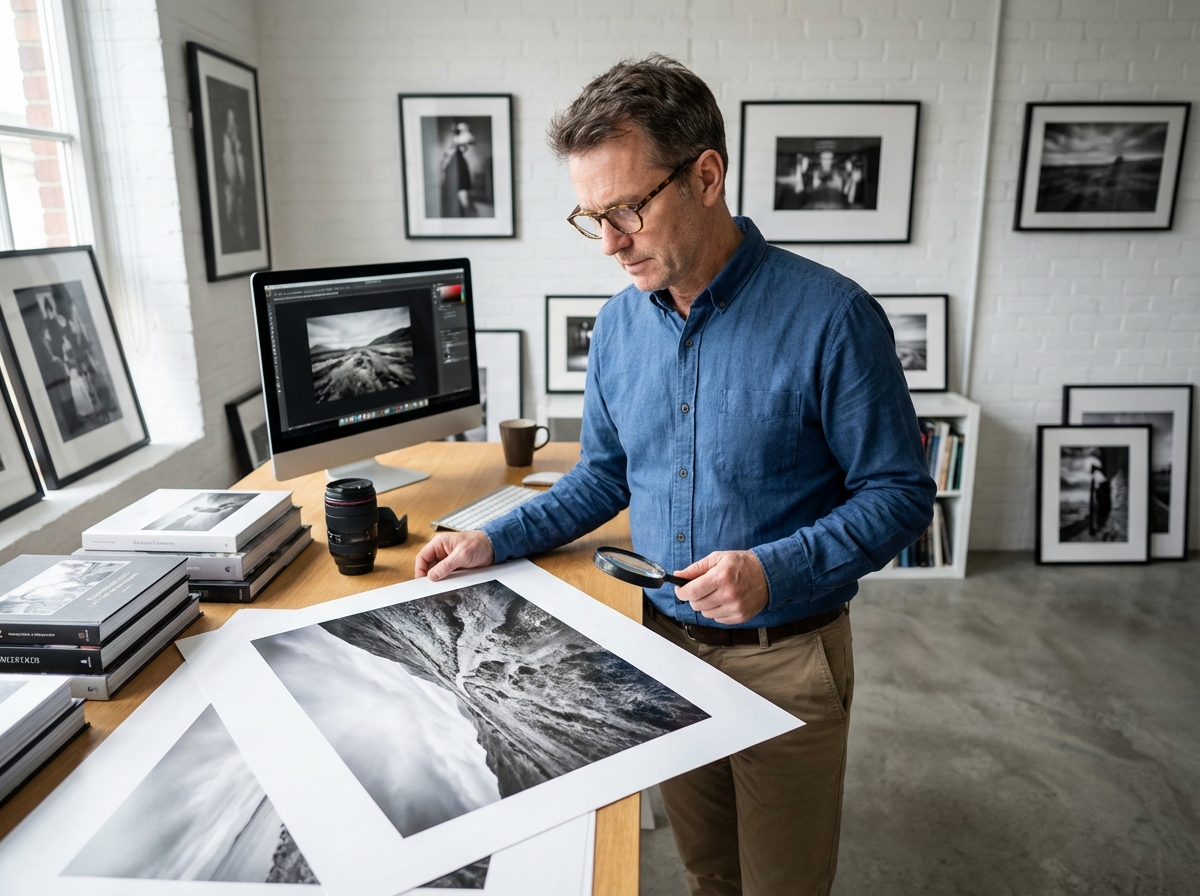
Overview of training, workshops, and resources for a smooth start
Accessing professional photography is not achieved through a single marked path. Different types of photography training punctuate the sector: long programs in recognized schools, intensive workshops, pathways designed for professional retraining, or simple introductory internships. In Paris, Arles, or elsewhere, every profile finds a suitable fit: freshly graduated high school students, employees in transition, or freelancers wishing to legitimize their practice.
Long programs at the École nationale supérieure or the École nationale supérieure des arts décoratifs establish solid foundations. Here, one learns to master shooting sessions, explore the diversity of photography professions, and understand the reality of statuses, from employment to independence. These pathways create a foundation for envisioning the future with confidence.
Workshops and short internships focus on practical experience. Participants handle equipment, practice managing ISO, tame VAT, and establish a trusting relationship with the client. To finance these trainings, the CPF (personal training account) is a significant ally. More and more programs are eligible for CPF funding, allowing for gradual skill enhancement.
Here are some resources and formats to build a suitable pathway:
- Diploma or qualification programs according to ambitions
- Practical workshops for beginners or advanced learners
- Digital resources and targeted research on Google
- Support in choosing a status and managing the administrative side of the profession
This diversity of options opens the door to personalized trajectories: strengthening an already solid practice, formalizing a skill set, or embarking on a new start. Professional photography is a path where one builds their own way, through thoughtful choices and shared experiences. Perhaps the next impactful image will be yours.