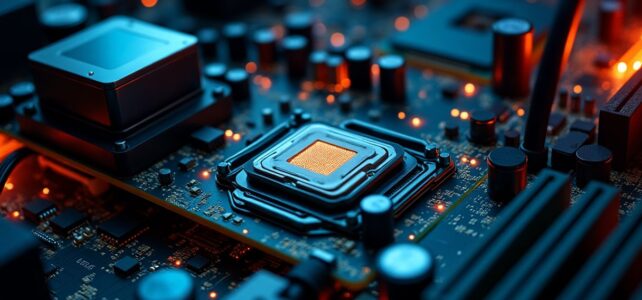
In the digital age, understanding various computer tools is essential for navigating the contemporary technological world. Computer hardware, often perceived as complex, is at the heart of our daily lives without us even noticing. From personal computers to massive servers, each component plays a vital role in processing, storing, and transmitting data. In a world where every click counts, where every byte can change the game, understanding what makes the machine run is a valuable skill. From their design to their use, these tools shape our interactions, our decisions, and our collective understanding of the world. A dive into this technical universe reveals a symphony orchestrated of circuits, chips, and components that, together, create the magic of modern computing.
The Internal Components of the Computer
Each computer is made up of several internal elements, each with a precise and interconnected function. These components, when operating in harmony, bring to life a machine capable of performing complex tasks.
The processor, often called the CPU, is the brain of the machine. Responsible for executing instructions, it performs rapid calculations that allow the computer to function. The more powerful the processor, the more capable the computer will be of handling complex tasks simultaneously.
The RAM, known as random access memory, plays a crucial role in temporarily storing data. It allows quick access to the information needed for ongoing processes, thus optimizing the speed and efficiency of the computer.
- Hard drives or SSDs store data long-term, providing a space where software and files can reside permanently.
- The motherboard acts as the backbone of the computer, connecting all components and allowing communication between them.
- Finally, the graphics card is responsible for producing images and videos, essential for multimedia tasks.
Peripherals and Accessories: Extensions of the System
Peripherals are complementary elements that enhance the user experience and expand the capabilities of the computer. They come in several categories, each offering specific functionalities.
Monitors display visual information, allowing users to interact with the system intuitively. The quality of the screen, measured in resolution and refresh rate, greatly influences visual performance.
Keyboards and mice serve as primary input tools, facilitating communication between the user and the machine. Technologies vary, ranging from mechanical keyboards to optical mice, each offering a unique experience.
Other peripherals include printers, essential for producing paper documents, and scanners, which convert physical information into digital formats.
Infrastructures and Networks: The Backbone of Connectivity
The efficiency of modern computing relies on robust infrastructures and well-designed networks, ensuring smooth communication between different systems and users.
- Servers play a central role in storing and managing data on a large scale, supporting services such as websites and databases.
- Routers and switches regulate data traffic, ensuring that information reaches its destination quickly and securely.
- Network cables, including Ethernet cables, form the physical infrastructure that transports data between devices.
The importance of wireless networks continues to grow, offering increased flexibility and mobility to users. Wi-Fi and Bluetooth technologies enable the connection of various devices without physical links, simplifying access to information.
In a context where computing continues to evolve, it is fascinating to observe how each component, each system, contributes to a complex technological ecosystem. Just like the catering equipment that supports our culinary experiences, computer hardware is fundamental to our interaction with the digital world.
In summary, the world of computer hardware is a rich and constantly evolving field. Each component, each peripheral, plays an indispensable role in the functioning of our modern systems. Understanding these elements allows us to fully leverage the technologies available while adapting our tools to our specific needs. Whether by upgrading an internal component or adding a peripheral, the possibilities for improvement and optimization are endless, opening new avenues for exploring and interacting with the digital world. Computer hardware, much like a complex musical score, reveals its secrets to those who take the time to explore it in depth.